
Scrapping Plan and non-Plan classifications necessitates the change

The government plans to borrow a record Rs 15.4 lakh crore from dated securities in FY24 to meet its expenditure requirement to prop up the economy.

The Centre's fiscal deficit, the gap between the government's expenditure and income, stood at Rs 1 trillion during April-May, constituting over one-fourth of the budget estimate for the entire 2010-11 fiscal.

Only experienced investors with a high risk appetite, a grasp of market cycles, and comfort with volatility and timing risk should invest.

The Reserve Bank of India's (RBI's) record surplus transfer to the government has raised hopes among bond traders that the government might reduce its gross borrowing for the current financial year (2024-25/FY25) by up to Rs 1 trillion. The RBI approved a dividend of Rs 2.11 trillion for the central government for 2023-24, marking an increase of roughly 141 per cent from 2022-23 (FY23). In addition, the contingency risk buffer has been raised to 6.5 per cent from the previous 6 per cent.

While the tax-to-GDP ratio of 9.88 per cent has been assumed for FY21, the same as last year, when it touched a decadal low, for FY22 a ratio of 10.7 per cent has been assumed, an average of the last five years.
'If the BJP detoxifies the nuclear liability law, it will bring economic, environmental and, most of all, strategic benefits.' 'Let's keep our fingers crossed and hope that this Budget promise is met soon -- ideally, before Mr Modi heads to his first meeting with Trump 2.0,' observes Shekhar Gupta.

The idea is to get the budget passed by Parliament along with Appropriations Bill and the Finance Bill by the end of March as this would ensure implementation of the Budget proposals from April 1.
To help compare numbers better, FinMin might retain the interim Budget Estimates with the new ones.
In the run-up to the Union Budget, expected to be presented on July 10, this paints a grim picture for Finance Minister Arun Jaitley.

In all, seven countries have expressed interest in hosting future Commonwealth Games with five of those focused on staging the centenary edition.

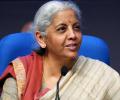
Finance Minister Nirmala Sitharaman is likely to step up efforts to boost consumption and rural economy while keeping inflation under check when she presents her sixth straight Budget on February 1. Experts said one way to boost consumption is to put more money in the hands of people, and one of the possible ways of doing it is by reducing the tax burden through tinkering with tax slabs or increasing the standard deduction. Another proposal is related to increasing the funds under the rural employment guarantee scheme MGNREGA and higher payout for farmers.

India's Finance Minister Nirmala Sitharaman has announced an ambitious plan to develop the country's top 50 tourist destinations in a "challenge mode", with the aim of boosting employment-led growth and attracting international visitors. The Ministry of Tourism has received a significant budget increase for 2025-2026, with a focus on enhancing tourism infrastructure, promoting domestic and international travel, and ensuring the safety of tourists, particularly women. The government plans to promote homestays, improve connectivity to tourist spots, and provide performance-linked incentives to states that demonstrate effective destination management. The budget also includes investments in public enterprises, skill development programs, and initiatives to promote medical tourism and spiritual tourism.

The Army has now fallen behind the other two services for four years in a row.

Defence stocks have been on a tear, with the Nifty India Defence index hitting all-time highs. Over the past week, the index jumped around 7 per cent, far outpacing the flat performance of the Nifty 50. Over the past month, its 12 per cent gain has trebled the benchmark's return.

The Centre and states are likely to budget for higher market borrowings to the tune of Rs 2.3 lakh crore next fiscal even though the Union budget may peg a lower-than-expected fiscal deficit for the Centre at 5.8 per cent of GDP, says a report. Icra Ratings anticipates higher redemptions will lead to gross market borrowings of the Centre to rise to Rs 14.8 lakh crore and of the states to jump by Rs 1.6 lakh crore to Rs 9.6 lakh crore, taking the combined borrowings (of the Centre and the states) to Rs 24.4 lakh crore in FY2024, up by 2.3 lakh crore from FY23 combined. In FY23, the Centre's gross borrowings are budgeted at Rs 14.1 lakh crore and of the states at Rs 8 lakh crore, or a combined borrowing of Rs 22.1 lakh crore, according to the agency.
'Market feels this Budget will promote all-round growth and that is what is giving it confidence.'

'Women' as a political constituency appears to be an idea that has come of age. It is changing India in ways that we only dimly understand, asserts Aditi Phadnis.

The fiscal situation is an improvement over the previous year.

Headline growth was quite weak heading into the Covid period but averaged 6.4 per cent and 6.7 per cent in the five years between FY16 and FY20 for GVA and GDP respectively, points out Abhishek Upadhyay.

Real estate developers are hoping that the slew of tax concessions announced in Union Budget 2025, set to take effect this financial year, will spur demand for affordable and mid-segment housing, even as the broader housing market shows signs of fatigue.

Your ultimate guide to helicopter rides in India this Valentine's Day

A 5 per cent increase in fees for various licences has been proposed without tweaking the existing tax structure. The BMC's total budget estimates for the next financial year are 8.95 per cent more than the last fiscal.
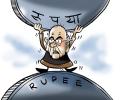
While the finance minister had a great opportunity to come out with flying colours while presenting this last Budget of his government, he didn't, says Omkar Goswami.

The Centre could further moderate its divestment target for 2024-25 (FY25), as it does not expect large receipts from asset sales - except some ongoing strategic ones, including IDBI Bank, which could spill over into next financial year. Also, it may drastically reduce its FY24 divestment target of Rs 51,000 crore. "We are still evaluating the Budget estimates for FY25. "New big-ticket asset sales are unlikely.

There hasn't been any dramatic moment in the first act (the Budget) but nobody would complain. It's par for the course as long as the figures don't change in the main Budget, which will be presented after general elections.

The new excise policy, introduced in Delhi in November 2021, made sweeping changes to the city's liquor trade.

'The numbers are null and void now. Look, we can give out projections now, but we know that a week later those numbers will also be irrelevant. So we need to wait,' a top government official said.
'Each state is unique, but when it comes to finance, the fundamentals cannot be different.'

The Union Budget 2025-26 on Saturday allocated Rs 2,33,210.68 crore to the Ministry of Home Affairs with the majority of the fund -- Rs 1,60,391.06 crore -- being given to central police forces like Central Reserve Police Force (CRPF), Border Security Force (BSF) and Central Industrial Security Force (CISF) which are responsible for internal security, border guarding and security of vital installations.

Defence exports grew 33 per cent in the calendar year 2023 (CY23) to around Rs 21,083 crore while domestic defence orders serviced by listed companies were Rs 48,000 crore. The sector is poised for steady growth. Budgeted domestic capex is likely to hit Rs 3 trillion per annum, and exports could reach $6 billion by FY29.

The push to develop Ayodhya as a tourism centre, accompanied by large-scale infrastructure projects, comes on the back of years of limited income growth and tourist inflows.

The interim budget 2024-25 on Thursday allocated Rs 202868.70 crore to the Ministry of Home Affairs (MHA) with the highest share of funds going to the paramilitary forces like Central Reserve Police Force (CRPF), Border Security Force (BSF) and Central Industrial Secular Force (CISF), showing priority on internal security and border guarding.

Finance Minister Nirmala Sitharaman presents her fourth Budget in Lok Sabha on Tuesday.

The new government that presents the full Budget for 2024-2025 in July should be ready to restructure the way divestment is managed and implemented, proposes A K Bhattacharya.

Revenue from divestment has fetched Rs 40,000-50,000 crore against target of Rs 2.10 trillion.

Sustaining the current 19.5 per cent growth rate in income and corporate tax collections may be difficult in next fiscal year given headwinds from a slowing world and high base effect, a government source said. Net direct taxes, which are made up of personal income tax and the tax levied on corporate earnings, have seen a record growth in current fiscal year, topping up the numbers projected in the Budget. The expected lower nominal GDP growth in 2023-24 on the back of threats of global recession could impact income tax collection, the government source told reporters ahead of the presentation of Union Budget 2023-24 on February 1.

The upcoming Union Budget to be presented on February 1 is likely to assume a nominal gross domestic product (GDP) growth between 10 and 10.5 per cent for FY26, a Business Standard poll of 10 economists showed. The first advance estimates released by the National Statistics Office (NSO) had estimated a nominal GDP growth of 9.7 per cent for FY25. Nominal GDP, calculated at current market prices, factors in the effect of inflation. It is used as the base to calculate crucial macroeconomic indicators, such as fiscal deficit, revenue deficit, and debt-to-GDP ratio.

The fast-moving consumer goods (FMCG) sector is likely to report muted results in the fourth quarter of 2024-25 (Q4FY25) due to weakness in urban consumption. The weakness may persist through the first half of 2025-26 (H1FY26).

Union Railway Minister Lalu Prasad Yadav presented the Railway Budget for 2004-2005 in the Lok Sabha on Tuesday (July 6, 2004).
